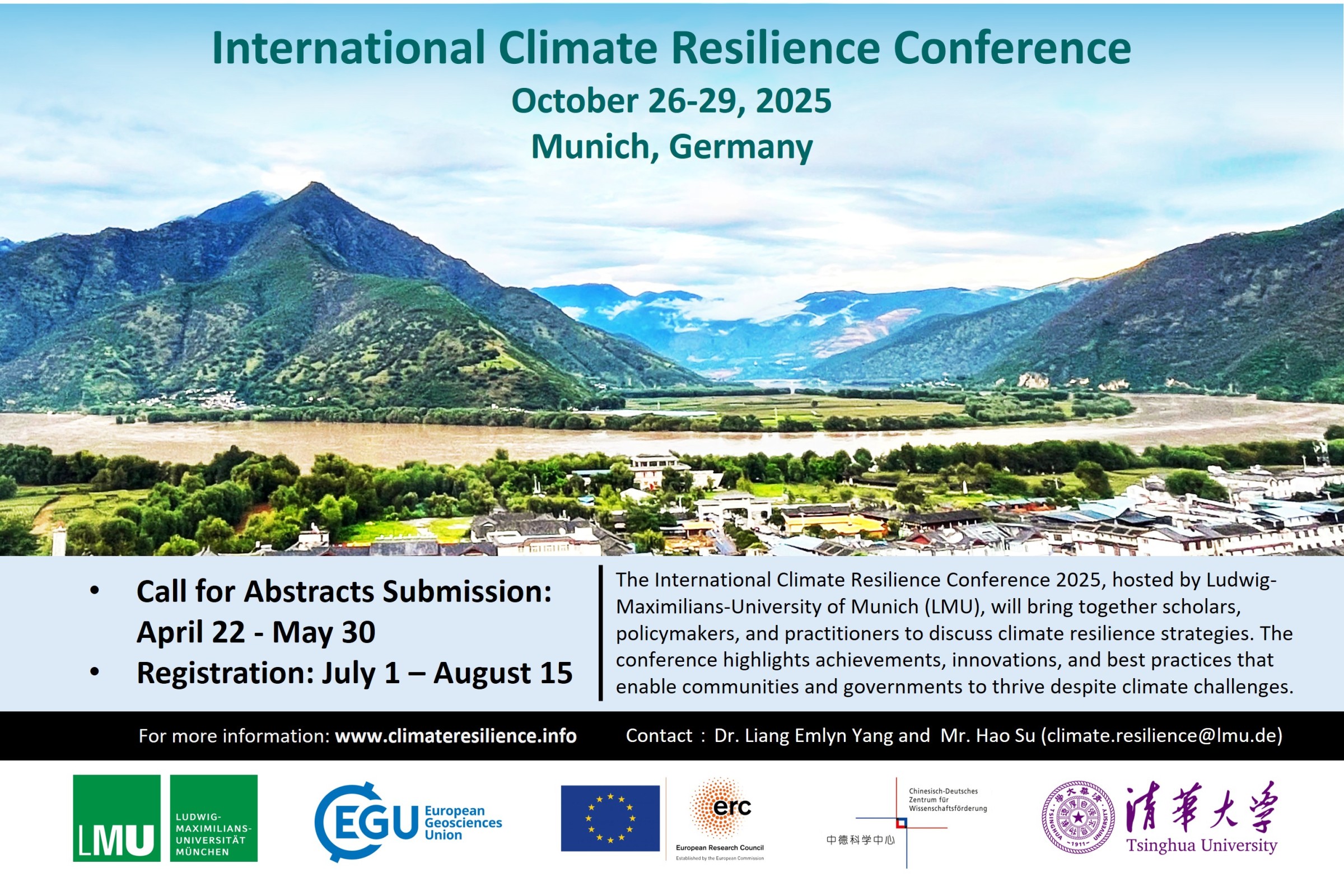
Adopted at the Closing Plenary of the International Climate Resilience Conference (iCARE 2025), Munich, 29 October 2025
Asthenos Capital is proud to be a signatory of the Munich Climate Resilience Initiative, demonstrating our commitment to advancing climate resilience through science, policy, and practice.
Climate change poses unprecedented challenges to societies, economies, and ecosystems across the world. While the scientific community has made remarkable progress in understanding risks, vulnerabilities, and impacts, the global response still falls short of enabling societies to adapt, transform, and thrive amid climatic emergency and uncertainty. Building resilience has become an imperative for sustainable and equitable development.
The International Climate Resilience Conference (iCARE 2025), held in Munich from 26–29 October 2025, gathered leading researchers, policymakers, practitioners, and community representatives to exchange knowledge and experience across 17 thematic sessions and over 200 presentations. Participants shared a clear message: advancing climate resilience requires robust collaboration among scientists, policymakers, and practitioners across disciplines, sectors, and regions.
The Munich Climate Resilience Initiative (MCRI) arises from this shared commitment to promote resilience thinking in research, practice, and policy.
Resilience is not merely about resistance or recovery but about adaptation, learning, and transformation, which together form the foundation for a better tomorrow. It connects environmental sustainability, ecological integrity, social equity, economic stability, cultural heritage safeguarding and institutional flexibility.
The MCRI calls for resilience-centered approaches, which celebrate progress, creativity, and the capacity for renewal and transformation, in addition to the risk-centered narratives, which emphasize vulnerability and loss. Resilience must also be guided by principles of justice and inclusion—ensuring that vulnerable populations are empowered rather than left behind in adaptation and transition processes.
Scientific understanding of climate resilience remains fragmented. The MCRI promotes integrated, transdisciplinary, and co-creative research that bridges science, policy, and practice. It encourages: